Melasma treatment
Melasma is a common, acquired disorder of hyperpigmentation that causes brown patches on the cheeks, forehead, upper lip and jawline.


Melasma is a common, acquired disorder of hyperpigmentation that causes brown patches on the cheeks, forehead, upper lip and jawline.
In case you missed my facial sunscreen recommendation in “9 Facial SPFs Rated By The Experts” in Sheerluxe last week, this is what I had to say… “Having suffered with acne for many years, it’s important for me to use an SPF moisturiser every morning that gives effective UV protection, but won’t give me spots. Garnier Ambre Solaire Anti-Imperfection sun cream is a favourite – it’s non-comedogenic meaning it won’t block pores and contains salicylic acid to soak up shine and target blemishes.” – Dr Justine Kluk, Consultant Dermatologist. © 2018 Dr Justine Kluk. Any redistribution or reproduction of part or all of the contents of this post in any form is prohibited. You may not, except with our express written permission, copy, distribute or commercially exploit the content. Nor may you transmit it or store it in any other website or other form of electronic retrieval system.
SPF. Sensible, essential and non-negtotiable. So says journalist Anna Hunter this week in her round up of the new, non-greasy, innovative formulations that are making sunscreen easier than ever to adapt into your daily routine. Keep reading below for my full interview with Get The Gloss about SPF makeup. To see my quotes in the article, including product recommendations, click here. If you want to wear makeup as your sole form of SPF, what should you look out for? I would strongly advise against using makeup as your sole form of SPF. We just don’t apply these products in a thick or even enough layer to get anywhere close to the level of protection provided by a typical sunscreen or sun protection moisturiser. Instead, makeup with SPF should be thought of as your second line of defence against UV rays once you’ve already applied sunscreen because two forms of sun protection are better than one. After cleansing, apply a broad spectrum (UVA/ UVB) sun protection moisturiser with SPF30 or higher to your face, ears, neck and chest. If you’re prone to breakouts, pick a non-comedogenic formulation that won’t clog your pores. Follow with an SPF-containing foundation or powder, depending on how much coverage you’re looking for. If you’re dashing in and out of the office during the day, remember to top up regularly. Would you have to wear a heavy layer or more than you might normally for adequate SPF protection? You would need to apply several times the normal amount of foundation, for example, to get anywhere near the level of protection stated on the bottle. Most of us just don’t want to put that amount of makeup on because it wouldn’t look good. Would you need to reapply SPF makeup throughout the day? Yes. If you’re exposing your skin to the sun, particularly between 11am and 3pm when it’s directly overhead, it is essential to top up your sun protection every couple of hours. Is there a formula that works best in terms of SPF protection (powder, liquid, solid)? Are SPF powders safe? To the best of my knowledge, there haven’t been any head to head studies published in the medical literature comparing the levels of sun protection from different types of foundation. I would therefore choose whichever formula or texture you prefer, provided you have already applied a dedicated sun protection product underneath. The challenge with powders is applying enough to get adequate protection. They are certainly convenient for top-ups, particularly in those who don’t like to wear heavy makeup and may also help soak up sweat that can cause your SPF to wear off, but shouldn’t be relied upon on their own. In terms of safety, skincare products are subject to rigourous scientific testing before becoming commercially available. If there is a concern about the ongoing safety of a particular type of product or research points to new health concerns, they are usually withdrawn pretty quickly. It would seem sensible to stick with reputable brands who specialise in sun protection and have a good track record for safety when selecting your products. Do you have any favourite SPF base makeup that you would recommend? Heliocare oil free compact SPF50 Colorescience Sunforgettable SPF30 or SPF50 Garnier Ambre Solaire nourishing lip protection stick SPF20 In terms of SPF in other makeup, what should you look out for when buying a lipstick/ lip balm/ under eye concealer etc? For lip protection, your best bet is a clear lip balm or stick with the highest SPF that you can find. Most of those currently available are SPF15-20. If you can’t bear the thought of going without lip colour, apply your ordinary lipstick on top of the SPF balm, allowing a few minutes for it to soak in, or use the SPF lip balm as a type of gloss on top. My thoughts about eye shadows, concealers and other types of makeup with SPF are that they aren’t be applied in a thick enough layer to give any meaningful protection on their own so they must always be used as well as sunscreen, not instead of, and simply be considered a boost to whatever protection is already in place. © 2018 Dr Justine Kluk. Any redistribution or reproduction of part or all of the contents of this post in any form is prohibited. You may not, except with our express written permission, copy, distribute or commercially exploit the content. Nor may you transmit it or store it in any other website or other form of electronic retrieval system.
I was recently asked in an interview how living in a busy city, like London, can impact the health of our skin. Of course, there are multiple lifestyle and environmental factors to consider, but I think that pollution and stress are worthy of particular mention. If you’d like to know my thoughts on the matter, keep reading below: Can you explain exactly how external factors like pollution, commuting, city air, stress etc contribute to skin damage? We all know that UV rays from sunlight accelerate skin ageing and increase our risk of skin cancer, but city smoke and pollution have also been shown to trigger formation of free radicals in the skin leading to collagen destruction which results in loss of firmness and elasticity, wrinkles and sagging. City air can also leave a layer of dust, grease and grime on the skin which, if not removed effectively when cleansing the skin, can lead to breakouts. You may have noticed this visibly after a busy commute on the underground in rush hour. Stress has been shown to alter the immune functions of the skin and skin barrier function which can lead to increased oil production, pore clogging and growth of the bacteria that predispose us to spots. The bottom line is that city aggressors such as pollution and stress can negatively impact skin health. How much do you think working in a city contributes to the state of our skin? Stress lowers our threshold for getting breakouts. This may be from deadlines looming, working long hours, contending with a difficult commute or not getting enough sleep. Pollution from motor vehicles and factories has been proven to accelerate skin ageing through dark spot and wrinkle formation. A lot of this evidence comes from heavily industrialised areas, such as China. Does avoiding the city centre on the weekend make any difference whatsoever in terms of improving skin health? We know that pollution, smoking and stress can cause skin problems to flare-up and are detrimental to long-term skin health, so it would seem to make sense that being in a cleaner, less polluted environment and getting some respite from our hectic working lives should mean radiant, healthy-looking skin. I’m not sure that a weekend is long enough for this repair and recovery to take place, but it may be a good place to start! Why when we go on holiday does skin tend to improve? People wear less make-up – is that part of the reason? There are a few possible reasons why our skin improves on holiday. Firstly, removing ourselves from the daily grind and actively finding time to relax reduces stress levels which is beneficial for skin health. Many skin problems, including acne, eczema and psoriasis have been shown to improve when we take ourselves out of a stressful environment. Wearing less makeup may lead to an improvement in spots or blackheads if you typically use heavy or long-wearing products to work because you need them to have the staying power to provide coverage from early in the morning till you get home at night. These sorts of products are often occlusive or comedogenic, meaning that they can trigger breakouts. Having a break from them whilst you’re on holiday may give your skin a chance to recover. Finally, gentle sun exposure on holiday can lead to an improvement in certain skin conditions, such as psoriasis, but we are all too aware that lack of UV protection is associated with a higher risk of skin cancer so common sense and the usual sun precautions should still apply. Do you think it is a placebo effect that people think their skin feels better by wearing less makeup at the weekend? I think we would all like the freedom to wear less makeup if we wanted to. In reality, most people with an active skin condition, like acne, don’t feel like they really have any choice because they are embarrassed about how they look and are afraid of being rejected by others. Going make-up free is often seen as the exclusive privilege of those with blemish-free skin, so you can easily understand why we all want to join the club! I try to reassure my patients who are embarking on a course of acne treatment that it is okay to wear makeup if it makes them feel more comfortable, as long as the products are suitable for acne-prone skin. The best bet in this situation is to look for the words “non-comedogenic” on the product label for reassurance that a particular foundation, concealer or powder won’t make breakouts worse. The hope and expectation is that once treatment starts to work, skin confidence increases and the possibility of wearing less makeup becomes a reality. © 2018 Dr Justine Kluk. Any redistribution or reproduction of part or all of the contents of this post in any form is prohibited. You may not, except with our express written permission, copy, distribute or commercially exploit the content. Nor may you transmit it or store it in any other website or other form of electronic retrieval system.
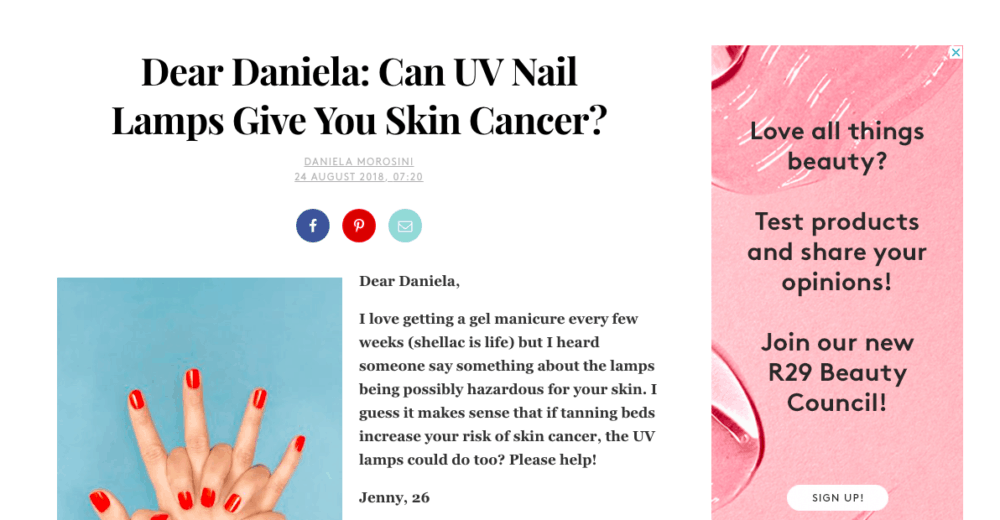
We know sunbeds and sunbathing are bad news when it comes to increasing our chances of developing skin cancer, but what about the UV lamps used for gel manicures? Daniela Morosini asked me this very question for her recent article in Refinery29 and it turns out the answer isn’t as simple as you might think. My round up of the current evidence is summarised below and a link to the full article in Refinery29 is available here. Whilst there is no doubt that tanning beds increase the risk of skin cancer, current evidence on the carcinogenic risk of UV nail lamps is variable and controversial. Some studies suggest that the risk is clinically significant and there have been a small number of case reports linking the use of UV nail lamps to the development of skin cancer on the hand, whilst other studies have concluded that the exposure risk is negligible and that thousands of individuals would need to use one of these lamps regularly for one to develop a squamous cell carcinoma (a type of skin cancer) on the back of the hand. One of the challenges in quantifying the true risk of UV nail lamps is that research is still very limited on the subject. Even then, some of the existing data suggesting that they are safe to use was conducted by those with a commercial interest in nail products, introducing potential bias when interpreting the outcomes. A further challenge is that there are a multitude of different brands using different types of bulbs. The bottom line is that we don’t yet know for sure whether exposure from typical use of these lamps, for example less than 5 minutes twice per month, does actually increase the risk of skin cancer and until then caution must be advised. Whilst there is no UK guidance so far, the Skin Cancer Foundation in the USA and the American Academy of Dermatology recommend that prior to a gel manicure, clients should apply a broad-spectrum sunscreen to the hands. Given their widespread use, further research is urgently required so that doctors can advise members of the public accurately. © 2018 Dr Justine Kluk. Any redistribution or reproduction of part or all of the contents of this post in any form is prohibited. You may not, except with our express written permission, copy, distribute or commercially exploit the content. Nor may you transmit it or store it in any other website or other form of electronic retrieval system.
It seems that summer is here to stay with weather forecasts promising another hot and sunny week! For practical advice about how to protect your skin in the sun, have a read of my tips below: 1. It is always important to protect exposed skin from UV rays to reduce the risk of skin cancer and to prevent premature ageing, pigmentation and exacerbation of skin conditions like rosacea. This is most crucial between April and September in the UK when UV levels are at their peak, but common sense should also apply at other times of year when UV levels are reduced, but not totally absent. 2. Apply a broad spectrum (UVA and UVB) sunscreen with an SPF of 30 or higher to exposed skin 15 minutes before heading outdoors. Look for a non-comedogenic product if you are prone to blackheads or breakouts, meaning that it won’t clog your pores. 3. No SPF offers 100% protection, but the higher the factor the better. For example SPF 15 gives approximately 93% protection compared with 97% for SPF30 and 98% for SPF50. 4. To get the level of protection on the product label, you need to apply the product liberally and in an even layer. As a rule of thumb, a golf ball-sized blob is about the right amount to protect your whole body and a quarter of a teaspoon is about the right amount for your face! 5. Most SPF products will have an expiry date stamped on the packaging or details of when the product should be replaced. In general, sunscreen should be replaced within a year of opening, but mists or sprays may last longer as they are stored in pressurised containers. 6. The terms “mineral” and “physical” sunscreen are often used interchangeably to describe sun protection products that scatter or reflect UV radiation. The primary ingredients in these products are titanium dioxide or zinc oxide. Chemical sunscreens absorb UV radiation and are composed of synthetically-prepared organic chemicals that can be classified as UVA or UVB absorbers. They are often combined with physical sunscreens or with each other to prevent UV radiation from penetrating the epidermis, the skin’s uppermost layer. 7. I would strongly advise against using makeup as your sole form of SPF. We just don’t apply these products in a thick or even enough layer to get anywhere close to the level of protection provided by a typical sunscreen or sun protection moisturiser. Instead, makeup with SPF should be thought of as your second line of defence against UV rays once you’ve already applied sunscreen because two forms of sun protection are better than one. 8. Sweating, swimming and towelling off can reduce the effectiveness of your sunscreen, so it needs to be topped up every couple of hours and as soon as you get out of the pool. Even if you’re just dashing in and out of the office for lunch or on the way home, your sunscreen will lose effectiveness over the course of the day and is likely to have rubbed off a little so care should still be taken with topping up in a city environment. 9. Take extra precautions or head indoors between 11am and 3pm when the sun is directly overhead. Remember that no sunscreen gives 100% protection, so sun avoidance, protective clothing, sunglasses and hats should also be considered. © 2018 Dr Justine Kluk. Any redistribution or reproduction of part or all of the contents of this post in any form is prohibited. You may not, except with our express written permission, copy, distribute or commercially exploit the content. Nor may you transmit it or store it in any other website or other form of electronic retrieval system.
Is SPF makeup really worth it? My opinion is that it boosts your base SPF rather than replacing it so should be considered a second line of defence. Read my comments for Get The Gloss this week by clicking here. © 2018 Dr Justine Kluk. Any redistribution or reproduction of part or all of the contents of this post in any form is prohibited. You may not, except with our express written permission, copy, distribute or commercially exploit the content. Nor may you transmit it or store it in any other website or other form of electronic retrieval system.
Victoria Derbyshire interviews me and actress Terri Dwyer about melanoma, sunbeds and sun safety. © 2015 Dr Justine Kluk. Any redistribution or reproduction of part or all of the contents of this post in any form is prohibited. You may not, except with our express written permission, copy, distribute or commercially exploit the content. Nor may you transmit it or store it in any other website or other form of electronic retrieval system.
Number 1: Protect your skin from the sun every day. Whether spending a day at the beach on holiday or out and about in London running errands, sun protection is essential. Choose a broad spectrum (UVA/ UVB) sun protection moisturiser with SPF 30 or higher and use it under your make-up every single day without fail, 365 days per year, come rain or come shine. There are lots of really nice, cosmetically acceptable sunscreens available these days that don’t feel sticky or leave white marks. I tend to use a tinted one which doubles as a primer or base layer for my make-up. If you have acne prone skin, remember to ensure that the product is labelled non-comedogenic. Number 2: Don’t sunbathe to get a tan, use self-tanner instead. Not only does tanning increase your risk of skin cancer, it also prematurely ages your skin. The same goes for sunbeds and other indoor tanning devices. Just don’t do it. Ever. Enjoy time outdoors when the weather is good, but do it sensibly. To avoid ending up with crepey skin and brown spots, apply sunscreen to your face and any other exposed skin 15 minutes before going outside otherwise your neck, chest and hands will give the game away. Accessorise with a hat to keep the sun off your face. Cover up or reapply sunscreen after swimming, sweating or towelling yourself. If you’re new to the party, pale is in. If you can’t get used to it, fake it. Number 3: If you smoke, stop. We all know that it increases your risk of heart disease and cancer, limits your exercise capacity and gives you bad breath. If all of these aren’t off-putting enough, it also rapidly accelerates skin ageing causing wrinkles and a dull, sallow complexion. Repeated pursing of the lips over time in order to drag on a cigarette also causes vertical furrows to form around the lips. These are sometimes unflatteringly referred to as “barcode lines” for obvious reasons and often necessitate Botox, filler, peels or laser resurfacing (and sometimes a combination of these) to reduce them. Extra tip for free…drinking through a straw or straight out of a bottle also forces you to purse your lips in order to form a seal so carries the same risk of forming creases around the mouth if you do it frequently over time. Pour your drink into a glass to avoid this. And ditch the cigarettes! Do your future self a favour, aim for brighter skin and a healthier body and go get yourself some fresh air. Number 4: Avoid repetitive facial expressions. One of the first signs of skin ageing is the appearance of fine lines. These are usually first spotted around the corners of the eyes (AKA crow’s feet) and may be noticed as early as our twenties. So what causes these? When you smile, laugh, frown or squint, you contract your facial muscles. If you repeatedly contract the same muscles over and over again for many years, the lines produced by facial expression stay put when you return to your resting face. Over time, they become deeper and more pronounced. Wearing glasses for reading and sunglasses in brighter weather can help reduce the lines caused by squinting. What else? Well…don’t stop smiling or laughing for goodness sake, but if you’re bothered by the appearance of fine lines and wrinkles, get your skincare routine right and think about wrinkle relaxing procedures to stop those subtle crinkles becoming deep creases! Number 5: Drink less alcohol. Or at the very least stick to recommended limits of 21 units per week for men and 14 units per week for women. Alcohol significantly dehydrates the skin resulting in a coarse texture, dull skin tone and dark sunken eyes. Number 6: Exercise most days of the week. Moderate exercise can improve circulation and boost the immune system. This, in turn, may give the skin a more healthy, luminous appearance. Number 7: Eat a healthy, well-balanced diet. Sorry to sound like the fun police again, but there a few studies suggesting that getting plenty of fresh fruit and veg in your diet helps prevent damage that leads to premature skin ageing. This may be due to the presence of antioxidants in these foods. Antioxidants block or neutralise collagen-damaging free radicals generated by pollution, cigarette smoke, our own metabolic processes and various other nasties in the environment. Findings from research studies also suggest that a diet containing lots of sugar or other refined carbohydrates can accelerate ageing. So, eat your greens…and your reds, blues, oranges and yellows! Number 8: Wash your face twice a day and after sweating heavily. Sweat irritates the skin, so you should try to cleanse as soon as possible after exercise. If you can’t get to a sink, pop a small bottle of micellar water into your gym bag or backpack and wipe your face with moistened cotton pads as a halfway house till you get home. Always cleanse gently. Scrubbing your skin clean can cause irritation and irritating your skin accelerates skin ageing. Gentle washing helps to remove pollution, makeup, and other substances without irritation. Happy to share some of my current favourites…just ask! Number 9: Thou shalt moisturise. The skincare aisle is crowded. Whilst there are a few things that you can totally ignore, there are also some that you shouldn’t and moisturiser is one of them. The good news is that you don’t need to spend a fortune to find a good moisturiser. So how do you pick? An effective moisturiser contains two types of hydrating ingredients: a humectant (to draw water into the skin) and an emollient (to prevent water loss). Common humectants are glycerin, lactic acid and hyaluronic acid. Apply your moisturiser on top of your retinoid at night (more about retinoids and retinol in my final commandment about key active skincare ingredients). If you’re prone to greasy skin or breakouts, pick a non-comedogenic (non pore-blocking) or oil-free formulation wherever possible. In the morning, apply
How to look gorgeous well into your sixth decade? You could ask Jerry Hall…or you could check out some of the tips I shared with The Telegraph earlier this month. Journalist Victoria Hall selects her top beauty picks to help the cause including Paula’s Choice Anti-Aging Hyaluronic Acid Booster and The Ordinary Hyaluronic Acid Serum http://www.telegraph.co.uk/beauty/skin/beauty-changes-make-60s/ © 2017 Dr Justine Kluk. Any redistribution or reproduction of part or all of the contents of this post in any form is prohibited. You may not, except with our express written permission, copy, distribute or commercially exploit the content. Nor may you transmit it or store it in any other website or other form of electronic retrieval system.
As you might expect, I am frequently asked for skincare product suggestions. Indeed this is part of the service I provide for new patients to the clinic when we are planning their skin treatment; incorporating a combination of prescriptions, procedures and skincare products to create a programme that will deliver the best outcomes. BBC News recently asked me to help break this down into my top skincare ingredients for those who are navigating the beauty aisles on their own and don’t know where to start (see my previous blog post BBC News August 2017 to view the clip). So here you go… these are my top ingredient suggestions for healthier, brighter and more youthful-looking skin. You definitely don’t need to go out and buy all of them at once. Start with one or two and add sequentially as needed, and as tolerated by your skin. 1. SPF (sun protection factor). Pick a broad spectrum UVA/ UVB sun protection product with SPF 30 or higher. These reduce the risks of skin cancer and premature skin ageing e.g. dark spots and wrinkle formation. 2. Antioxidants. Examples include vitamin C serums. These neutralise free radicals generated by UV rays and city pollution that degrade collagen leading to loss of firmness and elasticity. Vitamin C antioxidants can also help diminish the appearance of uneven skin tone. 3. Retinol and retinoids. These are vitamin A derivatives that boost collagen and promote cell renewal. When applied regularly to the skin, they improve skin texture and tone, tighten pores, reduce breakouts and minimises fine lines leading to smoother, firmer and brighter skin. They should be applied at night to reduce photosensitivity (sensitivity to the sun) and need to be introduced gradually to reduce side effects e.g. dryness, tightness, peeling or irritation. A pea-sized quantity is sufficient for the face. Add more if you are treating your neck and decollete too. 4. AHAs (alpha hydroxyacids). These prevent the build-up of dead skin cells (essentially providing chemical exfoliation) which increases radiance and gives a brighter, more even skin tone. They can also reduce oiliness and decongest the skin so are great for controlling excess shine and preventing breakouts. 5. Peptides e.g. matrixyl. These stimulate new collagen synthesis (collagen production falls by 1% every year after the age of 25!). A great ingredient to look for in eye creams instead of retinol if not tolerated in the delicate eye area. 6. Hyaluronic acid. This is a powerful humectant, meaning it is capable of holding up to 1000 times it’s weight in water molecules so great for plumping dry, coarse, crepey skin. Given its soothing and hydrating abilities, it may also improve tolerability of ingredients like retinol or AHAs which can cause dryness and peeling when first introduced. A great ingredient to look for in your night cream. Make sure your products are working for you. Try a little exercise for me…next time you’re heading for the till in a beauty store, check the package label and see if you can identify any of the ingredients listed above. © 2017 Dr Justine Kluk. Any redistribution or reproduction of part or all of the contents of this post in any form is prohibited. You may not, except with our express written permission, copy, distribute or commercially exploit the content. Nor may you transmit it or store it in any other website or other form of electronic retrieval system.
What is melasma, why do some people get it and what can be done about it? Read my overview of this common skin condition here https://www.doctify.co.uk/blog/articles/ask-the-expert-melasma © 2016 Dr Justine Kluk. Any redistribution or reproduction of part or all of the contents of this post in any form is prohibited. You may not, except with our express written permission, copy, distribute or commercially exploit the content. Nor may you transmit it or store it in any other website or other form of electronic retrieval system.
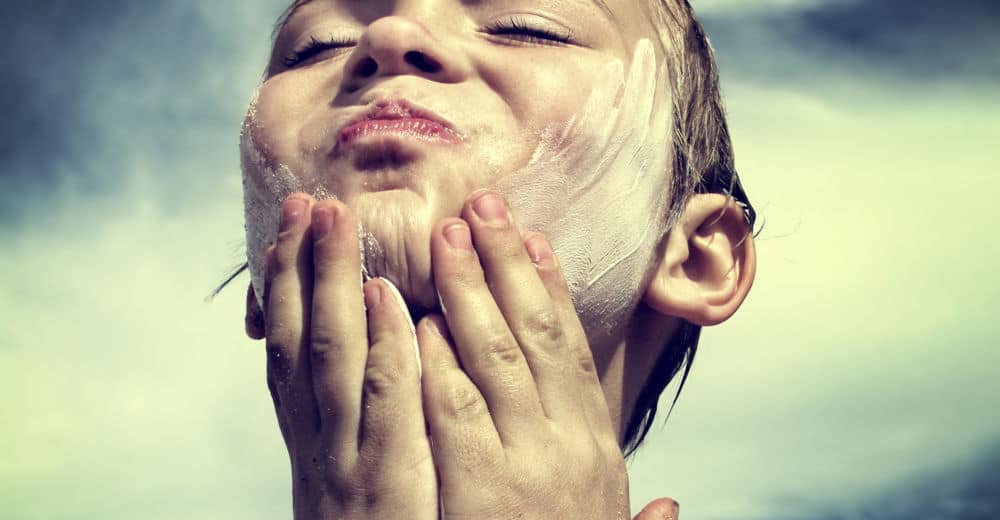
Do you know what to look for on the label of your sunscreen, how much to apply and how often to top up? Check out my tips on Good Zing http://www.goodzing.com/remedies/dr-justine-kluk/how-to-choose-your-sunscreen © 2017 Dr Justine Kluk. Any redistribution or reproduction of part or all of the contents of this post in any form is prohibited. You may not, except with our express written permission, copy, distribute or commercially exploit the content. Nor may you transmit it or store it in any other website or other form of electronic retrieval system.
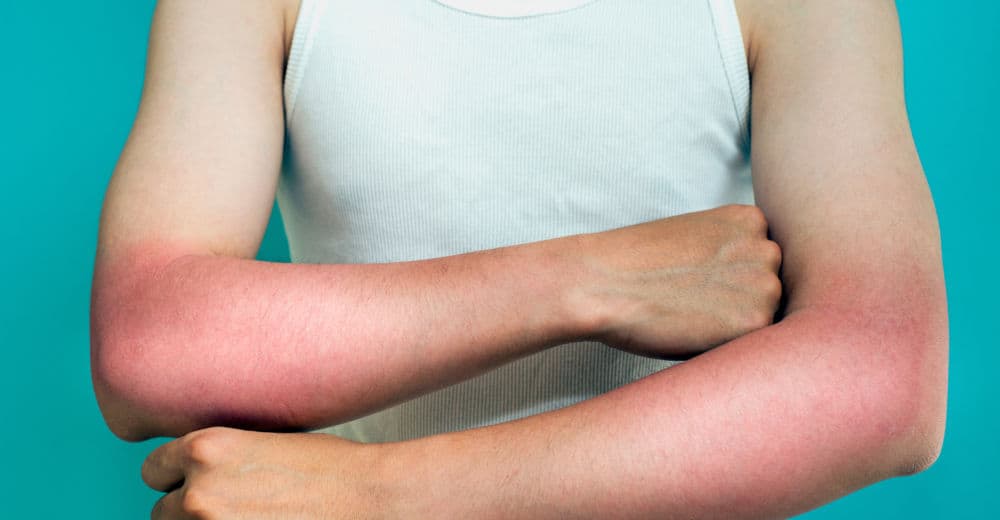
Ouch! The best and fastest ways to heal a sunburn with advice from me on Good Zing http://www.goodzing.com/articles/ouch-the-best-fastest-ways-to-heal-a-sunburn © 2017 Dr Justine Kluk. Any redistribution or reproduction of part or all of the contents of this post in any form is prohibited. You may not, except with our express written permission, copy, distribute or commercially exploit the content. Nor may you transmit it or store it in any other website or other form of electronic retrieval system.
Tips for keeping your little ones safe in the sun from my talk to London mum’s group Mums in the Wood http://mumsinthewood.com/nurse-them/specialists/sunprotection/ © 2017 Dr Justine Kluk. Any redistribution or reproduction of part or all of the contents of this post in any form is prohibited. You may not, except with our express written permission, copy, distribute or commercially exploit the content. Nor may you transmit it or store it in any other website or other form of electronic retrieval system.
Book an appointment with our Consultant Dermatologists to review your acne history and all the treatment options.
Book now